
Mastering the Art of Maintaining Sharp Knives for Culinary Success
by Marco Castro on Feb 08, 2026

You know, sometimes I think about all the time I've wasted in the kitchen wrestling with dull knives. It’s like trying to saw through a tomato with a butter knife – frustrating and messy. But then I learned about maintaining sharp knives, and honestly, it’s a game-changer. It’s not just about making your food look pretty; it’s about making cooking easier, faster, and even safer. So, let’s talk about how keeping those blades in top shape can really make a difference in your cooking life.
Key Takeaways
- A sharp knife is safer because it requires less force, reducing the chance of slips and accidents compared to a dull knife.
- Using sharp knives speeds up meal prep significantly by allowing for quicker, more precise cuts through ingredients.
- Proper washing, immediate drying, and using the right cutting surfaces help maintain your knives' sharpness and longevity.
- Techniques like whetstone sharpening and regular honing are vital for keeping your knives in good condition.
- Sharp knives not only improve efficiency but also boost confidence and allow for more creative food presentation and advanced cooking methods.
Understanding The Importance Of Maintaining Sharp Knives
Let's talk about knives. Not just any knives, but the ones that make cooking feel less like a chore and more like an art. Keeping your kitchen knives sharp is one of those things that sounds simple, but it makes a huge difference. It's not just about having a fancy tool; it's about how that tool actually works for you.
The Science Behind A Truly Sharp Edge
Think about what a knife does. It cuts. A sharp knife cuts because its edge is incredibly fine. Under a microscope, a dull edge looks jagged and uneven. A sharp edge, on the other hand, is smooth and aligned. This smooth edge glides through food with very little effort. It means less pushing and sawing, and more clean slices. This precision isn't just for looks; it affects how your food cooks and tastes.
Safety: A Counterintuitive Truth
This might sound backward, but a sharp knife is actually safer than a dull one. Why? Because a dull knife needs more force to cut. When you have to push harder, the knife is more likely to slip off the food and onto your hand. A sharp knife, however, cuts easily. You have more control, and the knife stays where you want it. Less slipping means fewer accidents in the kitchen.
A sharp knife requires less force, leading to better control and a reduced risk of slips and injuries. It's a simple principle that makes a big impact on kitchen safety.
Prolonging The Life Of Your Valued Knives
Good knives can be an investment. Letting them get dull isn't just inconvenient; it can actually damage them over time. A dull blade can get chipped or bent more easily. Regular sharpening keeps the blade in good shape, preventing damage and making sure your knives last for years. It's like taking care of a good pair of shoes – a little maintenance goes a long way.
Mastering The Art Of Knife Sharpening Techniques
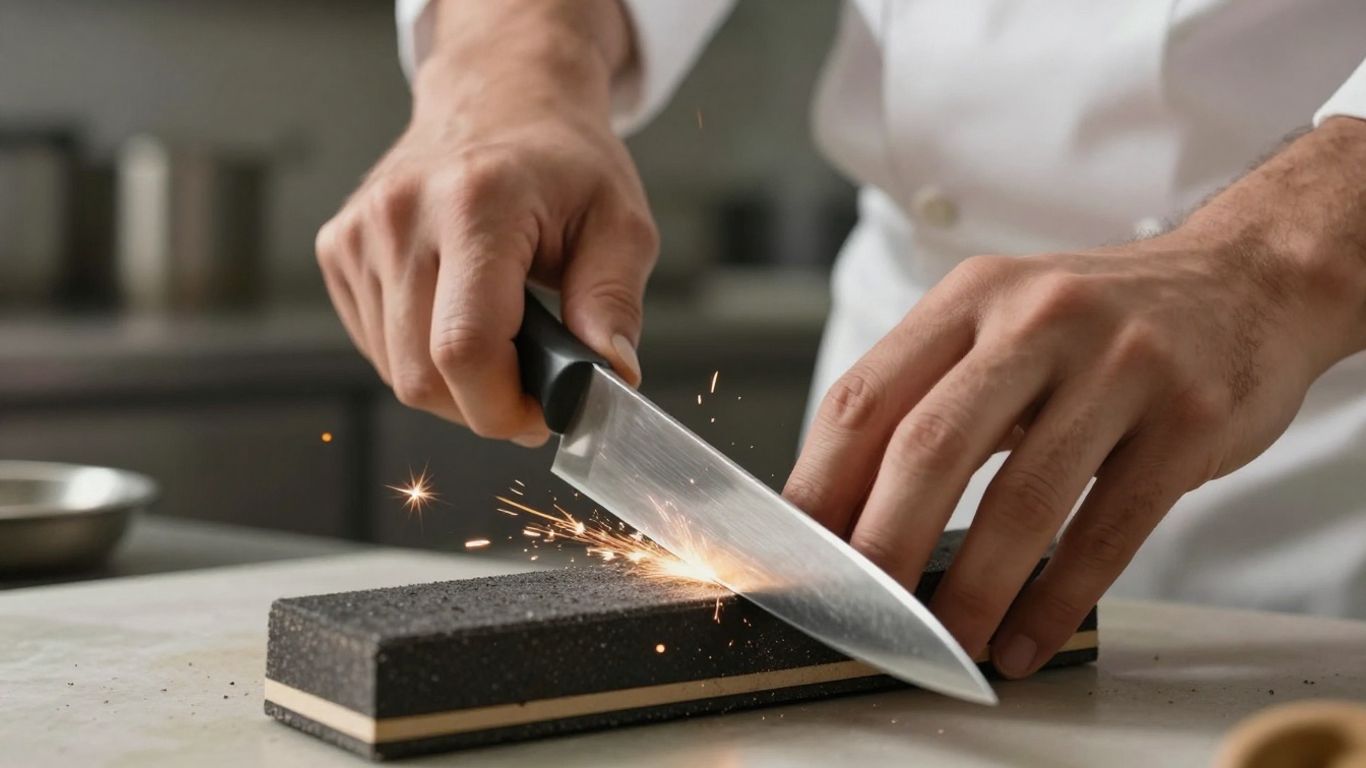
Keeping your knives sharp isn’t just about following some golden rule for chefs—it’s the thing that makes cutting tomatoes less frustrating and prepping dinner less of an arm workout. There’s a method for every mood, time crunch, and experience level. Let’s break down the sharpening process and look at how to keep your edge keen, whether you like to tinker with tools or want a quick fix after work.
Whetstone Wisdom For Precision Edges
Whetstones are a classic choice. They offer the most control, but they also take some practice. You start by soaking the stone, then use it to grind and refine your blade at just the right angle. It’s not fast food; this is Sunday roast-level attention.
Basic steps for using a whetstone:
- Soak your whetstone in water for 10-15 minutes if it’s a water stone (oil stones just need a bit of oil).
- Hold your knife at the correct angle—usually 15-20 degrees for most kitchen knives.
- Draw the blade across the stone, keeping even pressure as you move from heel to tip.
- Flip and repeat for the other side.
- Finish with a few gentle passes on a finer grit stone for extra sharpness.
A lot of people avoid whetstones because they seem fussy. But there’s nothing quite like the edge you get when you do it right—with steady hands and a bit of patience, even old knives can feel like new.
Honing On-The-Go For Quick Touch-Ups
Honing isn’t sharpening, exactly. Instead, it straightens out the tiny bends that form on your blade’s edge with regular use. Think of it as a quick tune-up between oil changes.
When to hone:
- Before starting meal prep
- After a heavy chopping session
- Anytime your knife just doesn’t seem to glide like it used to
Holding the knife at the proper angle (again, usually 15-20 degrees), swipe it along the honing rod a few times each side. It takes a few seconds and helps keep the edge aligned. Just remember, if the knife’s already very dull, honing won’t bring it back. You’ll need actual sharpening for that.
There’s a real comfort in keeping your blades tuned. Honing often means you’ll spend less time sharpening—and your knives will feel better in your hand day after day.
Exploring Electric Sharpeners For Convenience
Not everyone wants to play with stones and rods. Enter electric sharpeners. They’re fast, straightforward, and perfect if speed is your thing. You just pull your knife through a slot a few times, and the machine does the hard work.
Pros and cons of electric sharpeners:
| Electric Sharpeners | Pros | Cons |
|---|---|---|
| Simple to use | Quick results | Less control over the angle |
| Consistent edges | Good for beginners | Can remove too much steel |
| Great for most knives | No skill required | Not for delicate blades |
If you stick with reputable brands and follow the instructions, electric sharpeners can keep your knives reasonably sharp. But for specialty knives or those you truly care about, you might want to switch to a manual method from time to time.
Figuring out your sharpening routine is a personal thing. It depends on how much you cook, how fussy you are about your tools, and whether you enjoy the process. Whether you’re into the slow and steady method or want everything done in a flash, there’s a technique that fits into your kitchen without fuss.
Essential Practices For Maintaining Sharp Knives
Keeping your knives sharp isn't just about making them cut better; it's also about making them last longer and keeping you safe. A few simple habits can make a big difference.
Proper Washing And Drying Rituals
Think of washing your knives like giving them a gentle spa treatment. After you use a knife, give it a quick rinse under warm water. If there's food stuck on, use a soft sponge with a little bit of dish soap. The most important thing is to dry it right away with a soft cloth. Don't let it air dry, as that's a fast track to rust. And please, keep your good knives out of the dishwasher. The hot water, harsh soap, and banging around can really damage the blade and the handle.
- Rinse knives immediately after use.
- Use warm, soapy water and a soft sponge for tougher messes.
- Always dry thoroughly with a clean, soft cloth.
- Never put knives in the dishwasher.
Choosing The Right Cutting Surfaces
What you cut on matters a lot. Using a knife on hard surfaces like glass, stone, or metal is like running your blade against sandpaper. It dulls the edge really fast. Softer materials are your friend here.
- Wood: A classic choice. Wooden cutting boards are kind to your blades and have a nice feel. Just make sure to clean and dry them well to prevent bacteria.
- Plastic: Another good option. Plastic boards are easy to clean and don't dull knives as quickly as hard surfaces. You might want to have a couple of them – one for raw meat and one for veggies.
- Bamboo: Similar to wood, bamboo is a good choice, though it can be a bit harder. It's a sustainable option too.
Avoid cutting directly on countertops or plates. These surfaces will dull your knife edge in no time, making all your efforts to keep it sharp pointless.
Safe Storage Solutions For Blade Protection
Where you keep your knives when they're not in use is just as important as how you clean them. Tossing them into a drawer with other utensils is a recipe for disaster. The blades can bang against each other, getting nicked and dulled. Plus, it's a safety hazard when you reach into that drawer.
- Knife Block: A traditional and popular choice. It keeps each knife separate and protected. Make sure the slots are clean and dry.
- Magnetic Strip: Mounted on the wall, this saves counter space and keeps knives easily accessible. Just be careful to place the knife on and take it off gently to avoid scraping the blade.
- In-Drawer Organizers: If you prefer to keep knives in a drawer, use special organizers that have slots or sheaths to keep blades from touching.
- Blade Guards: For individual knives, especially if you transport them or store them in a drawer without an organizer, a blade guard (or sheath) is a great idea. It covers the sharp edge and protects both the knife and you.
The Efficiency Gains From Sharp Knives
Speeding Up Your Meal Prep
When your knives are sharp, they just work better. Think about chopping an onion. With a dull knife, you're pushing and sawing, and the onion kind of squishes and tears. It takes longer, and it's messy. A sharp knife, though? It slices right through with hardly any effort. This makes all the prep work go so much faster. Dicing, slicing, mincing – it all becomes quicker and less of a hassle.
Techniques For Efficient Cutting And Chopping
Having a sharp knife really lets you use good cutting techniques properly. You know how some chefs make herbs look like they just disappear when they chop them? That's a sharp knife and a good technique. A sharp blade lets you do things like a rocking motion for herbs, a clean push cut for veggies, or a smooth draw cut for bigger items. When the knife is sharp, these moves are easy and fast, and you get through your chopping way quicker.
Case Studies Of Time-Saving Benefits
Let's picture a busy restaurant kitchen during dinner rush. The chefs have a lot to do, and every minute counts. If their knives are sharp, they can get all their ingredients prepped – the vegetables diced, the meat sliced, the herbs chopped – really fast. This means the food gets to the customers quicker, everyone's happier, and the kitchen runs smoothly. It's not just about speed, though; it's about doing things right the first time, without fumbling.
A sharp knife doesn't just cut food; it cuts down on wasted time and frustration in the kitchen. It makes the whole cooking process feel more fluid and enjoyable, letting you focus on the actual cooking rather than fighting with your tools.
Here’s a quick look at how sharp knives save you time:
- Less Force Needed: Sharp blades glide through ingredients, meaning you don't have to push or saw as much.
- Cleaner Cuts: This leads to less mess and easier cleanup.
- Improved Control: You can make precise cuts faster, which is great for both speed and presentation.
- Reduced Fatigue: Less effort means you don't get as tired during long prep sessions.
Unleashing Creativity With Precision Cutting
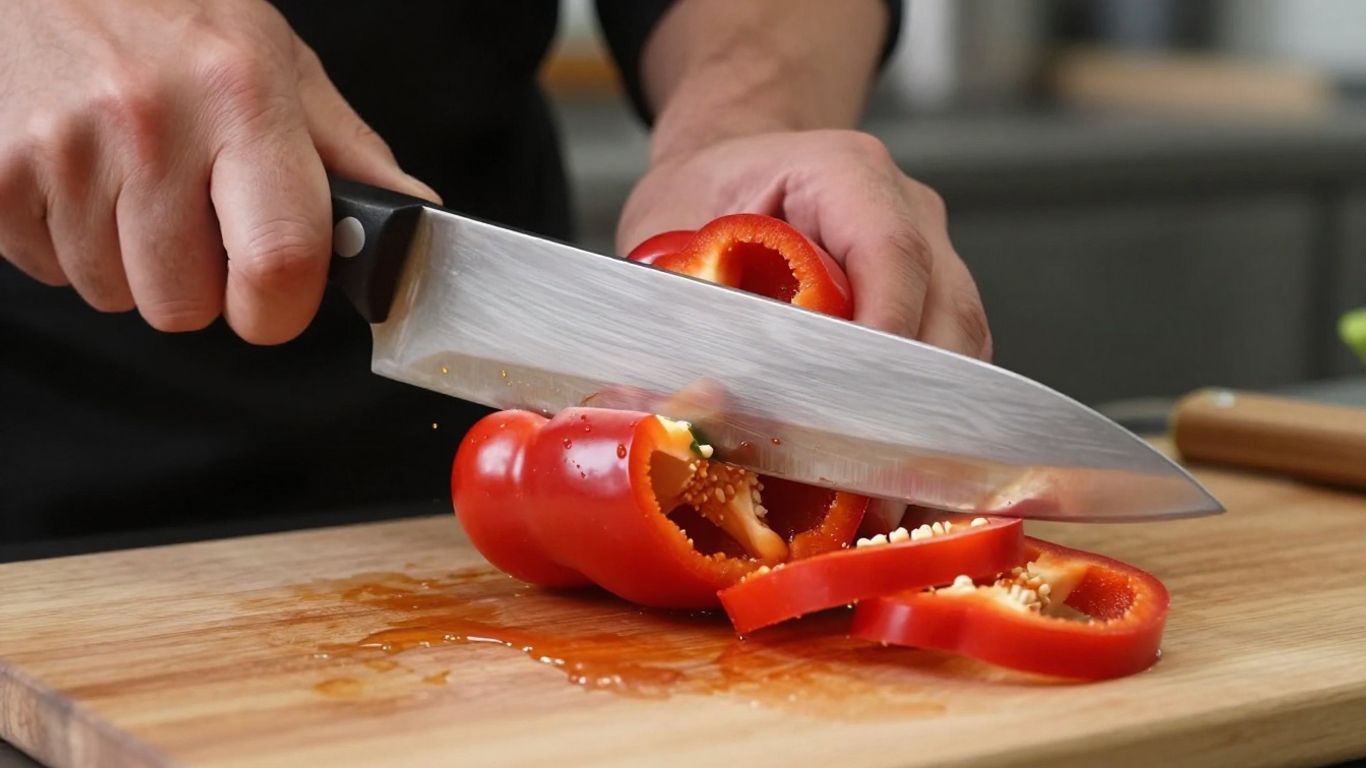
When you've got a sharp knife in your hand, cooking starts to feel less like a chore and more like, well, playing with your food—just in a good way. The confidence that comes with each clean slice opens up new creative options that simply aren't possible with a dull blade.
Elevating Your Food Presentation
A sharp knife is like a paintbrush for a chef. Suddenly, those ordinary vegetables and fruits become your art supplies. With clean, thin slices, you can fan out ripe tomatoes for a caprese salad or carve radishes into neat little rosettes that surprise dinner guests. Even something as simple as apple slices look so much better when they're cut without crushing or tearing. Presentation matters, and precision cuts make any plate more appealing, whether you're prepping for your family or staging a meal to share on social media.
Exploring Advanced Culinary Techniques
Once you know your knife will follow every movement, you start to push yourself. Here are just a few advanced cuts and techniques that rely on sharp tools:
- Julienne: Matchstick-thin strips—great for stir-fries.
- Chiffonade: Fine ribbons, often of leafy herbs or greens, for garnish or incorporation.
- Brunoise: Tiny cubes, often used in soups for texture and consistent cooking.
- Deboning: Removing bones from cuts of meat with precision and little waste.
A well-sharpened blade makes these tasks much easier—and safer—meaning it's far less likely you'll end up with a ragged mess or a dangerous slip. Watching your diced onions turn out perfectly square or your sliced carrots lay in uniform strips is pretty satisfying.
| Technique | Effect On Ingredient | Uses |
|---|---|---|
| Julienne | Thin, even sticks | Stir-fries, salads |
| Chiffonade | Fine ribbons | Garnish, salads, pastas |
| Brunoise | Very fine cubes | Soups, sauces |
| Slicing | Clean, even pieces | Sashimi, fruits, sandwiches |
The Joy Of Cooking With Sharp Knives
Honestly, there's something almost meditative about working with sharp knives. Each slice takes less effort. You can focus more on the feel and flow of the ingredients. Chopping herbs stops being frustrating—no more bruised basil or torn cilantro. Instead, you watch the pieces fall away, all neat, and realize your dish looks (and probably tastes) better.
- Tasks go faster; less time sawing, more time actually cooking
- Ingredients keep their shapes and textures, so results are prettier and tastier
- You start wanting to try new recipes just to practice your new skills
Cooking with sharp knives makes kitchen prep smoother, lets you try new techniques, and actually brings some fun and pride into everyday meals. Before you know it, you're not just making food—you're making something beautiful.
Building Confidence In The Kitchen
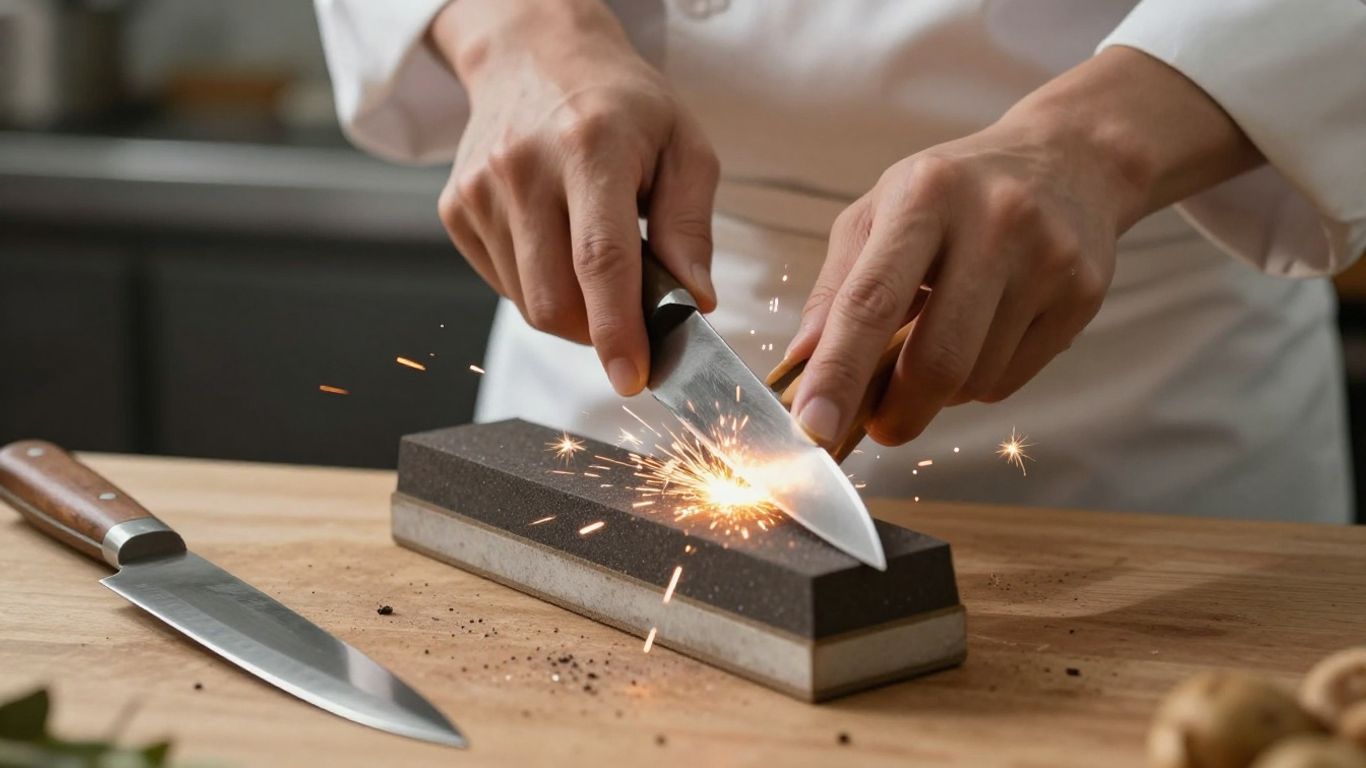
Sharper Skills For Intricate Tasks
When your knives are sharp, they just work. You know that when you pick up your chef's knife, it's going to slice through that onion without you having to saw back and forth. This predictability makes all the difference. You can focus on the technique, not on fighting the tool. Think about making those super thin slices of garlic for a stir-fry, or maybe finely mincing herbs for a sauce. With a dull knife, these tasks are frustrating and often result in uneven, mangled pieces. A sharp knife lets you achieve those fine, precise cuts with ease, making your dishes look and taste better. It's like going from trying to draw with a crayon to using a fine-tipped pen – suddenly, you can do so much more.
Fearless Handling Of Your Tools
Let's be honest, a dull knife can be pretty scary. You have to push harder to get it to cut, and that's when accidents happen. The blade can slip off the food and go in an unexpected direction. It makes you hesitant, right? You might find yourself holding your breath when you need to make a tricky cut. But with a sharp knife, it's a different story. The blade glides through the food with minimal effort. You have so much more control. This control means you can relax, work more smoothly, and actually enjoy the process of cooking without that nagging worry about cutting yourself. It's about feeling secure and capable with the tools in your hand.
Real-Life Wins With Perfect Cuts
Think about the last time you tried to slice a ripe tomato with a dull knife. It probably squished, and the seeds went everywhere. Not exactly a great start to a salad. Now, picture doing that with a sharp knife. It slices cleanly, leaving the tomato intact and the seeds neatly contained. This isn't just about looks; it's about how the food behaves. Uniform cuts mean food cooks more evenly. Delicate herbs stay fresh and vibrant when sliced thinly, not bruised. These small victories add up. They make your meals more appealing and show that you're in command of your kitchen. It's that feeling of accomplishment when a dish turns out just right, and you know your sharp knives played a big part in it.
Your Kitchen's New Best Friend
So there you have it. Keeping your knives sharp isn't some big, scary secret that only pros know. It's really just about a little bit of care and knowing how to use the right tools, like a whetstone or a honing rod. When your knives are sharp, cooking just feels different – easier, safer, and honestly, more fun. You'll chop faster, your food will look better, and you'll probably feel more confident in the kitchen. Think of it as giving your favorite tools a little TLC so they can do their best work for you. Give it a try, and you'll see what a difference it makes.
Frequently Asked Questions
Why is a sharp knife safer than a dull one?
It might sound strange, but sharp knives are actually safer! A dull knife needs more force to cut, making it more likely to slip and cause an accident. A sharp knife slices through food easily with less pressure, giving you better control and reducing the chance of cuts.
How often should I sharpen my knives?
It's best to sharpen your knives whenever they start to feel dull, which could be after a few weeks or months of use, depending on how much you cook. For quick touch-ups between sharpenings, use a honing rod regularly, maybe even before each cooking session.
What's the difference between sharpening and honing?
Sharpening actually removes metal to create a new, sharp edge. Honing, on the other hand, just realigns the tiny teeth on the edge of the blade that get bent out of shape during use. Honing keeps your knife sharper for longer between actual sharpenings.
Can I use a dishwasher to clean my knives?
It's a big no-no! Dishwashers are rough on knives. The harsh soap can damage the blade, and the banging around can dull or even chip the edge. Plus, the heat can harm the handle. Always wash your knives by hand with warm, soapy water and dry them right away.
What's the best way to store my knives?
To keep your knives safe and sharp, avoid just tossing them in a drawer. A knife block, a magnetic strip on the wall, or individual blade guards are great options. This protects the sharp edge from getting damaged and keeps you from accidentally cutting yourself.
Are electric knife sharpeners any good?
Electric sharpeners can be super convenient for a quick sharpening. However, they can sometimes remove too much metal if you're not careful, which can shorten your knife's life. Whetstones give you the most control, but they take more practice. If you use an electric sharpener, follow the instructions closely!


