
Choosing the Right Blade Size for Hunting: A Comprehensive Guide
by Marco Castro on Feb 22, 2026

Picking the right blade size for hunting can feel like a guessing game at first. There are so many options out there, and every hunter seems to have their own favorite. The thing is, the size of your knife really does matter for the type of hunting you do and the tasks you need it for. Whether you're after rabbits or elk, or just want a knife that won't weigh down your pack, understanding blade size for hunting will help you make a better choice and avoid frustration in the field.
Key Takeaways
- Blade size for hunting should match the size of the game you plan to hunt—smaller blades for small game, larger for big game.
- A mid-sized blade (around 3.5 to 4 inches) is a good all-purpose choice for most hunters.
- Fixed blades offer more strength and are easier to clean, while folding knives are lighter and easier to carry.
- Blade thickness and shape also impact how well your knife handles specific tasks, not just the length.
- Comfort, control, and how the knife feels in your hand are just as important as the actual blade size.
Understanding Blade Size For Hunting
The Importance Of The Right Blade Size
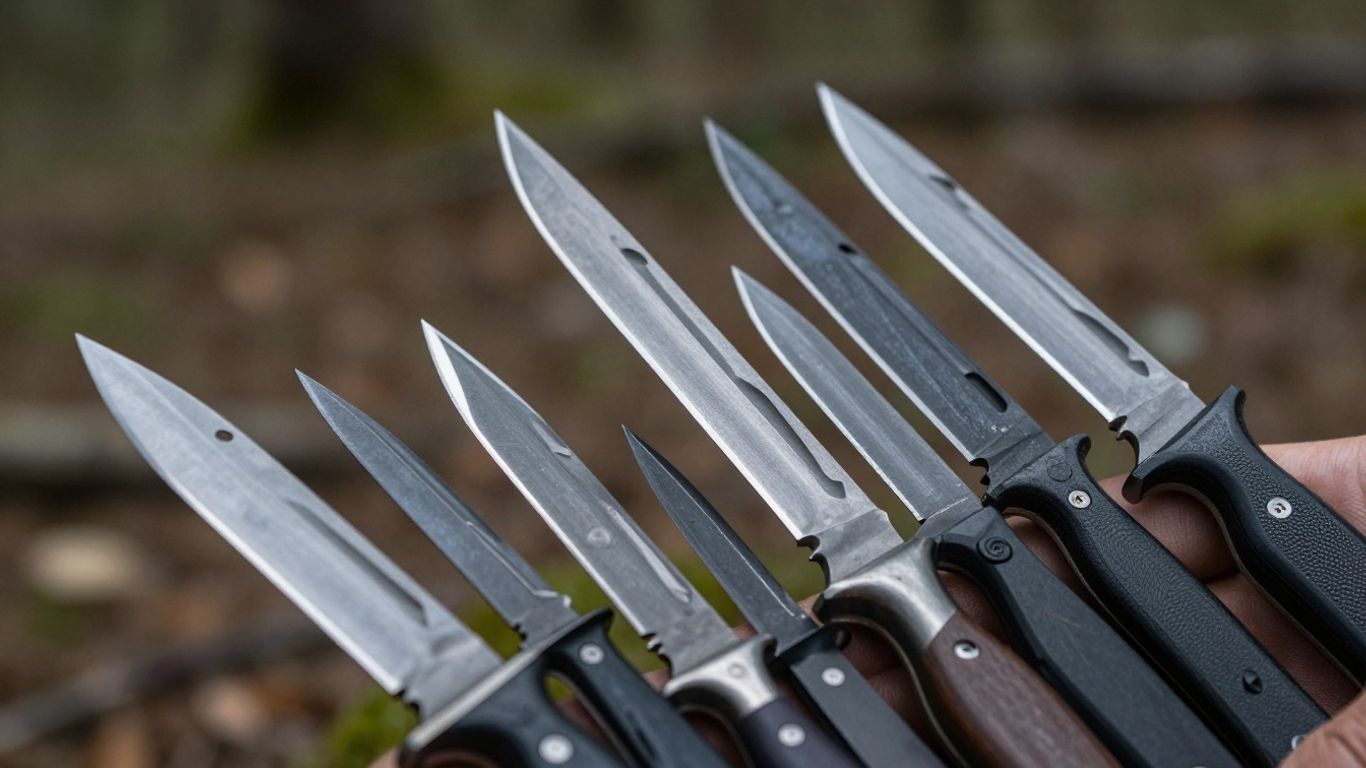
Picking the right knife for hunting isn't just about having something sharp; it's about having the right sharp thing for the job. Think of it like using a screwdriver versus a hammer – you wouldn't use the wrong tool and expect good results. The size of your knife's blade plays a big part in how well it performs, especially when you're out in the field. A blade that's too big can be clumsy, while one that's too small might struggle with tougher tasks. Getting the size right means your knife will be more effective, safer to use, and generally make your hunting experience smoother.
How Blade Size Impacts Field Dressing
Field dressing an animal is where blade size really shows its importance. You need to make precise cuts to open the body cavity and remove internal organs without puncturing them. A blade that's too long or wide can make these delicate maneuvers difficult, potentially leading to a mess or damaging the meat. On the other hand, a blade that's too short might require more sawing motions, which can be less efficient and harder on your hands. The ideal size allows for controlled, clean cuts, making the whole process quicker and cleaner.
The size of your hunting knife's blade directly affects your ability to perform precise cuts, manage delicate tasks, and maintain control during field dressing. It's a balance between having enough length for efficiency and enough control for accuracy.
Matching Blade Size To Your Hunting Needs
What kind of game are you hunting? That's the first question to ask when deciding on blade size. Smaller game like rabbits or squirrels might only need a smaller, more nimble blade, perhaps around 2 to 3 inches. For medium game such as deer, a blade in the 3.5 to 4.5-inch range often works best, offering a good mix of cutting power and control. If you're planning on tackling larger animals like elk or bear, you might want a sturdier blade, possibly 4.5 inches or longer, to handle the heavier work.
Here's a quick look at general blade length recommendations:
- Small Game (Rabbits, Squirrels, Birds): 2 - 3 inches
- Medium Game (Deer, Antelope): 3.5 - 4.5 inches
- Large Game (Elk, Moose, Bear): 4.5+ inches
Remember, these are just starting points. Your personal preference and the specific tasks you anticipate performing will also influence the best size for you.
Choosing A Blade Size By Game Type
Ideal Blade Sizes For Small Game
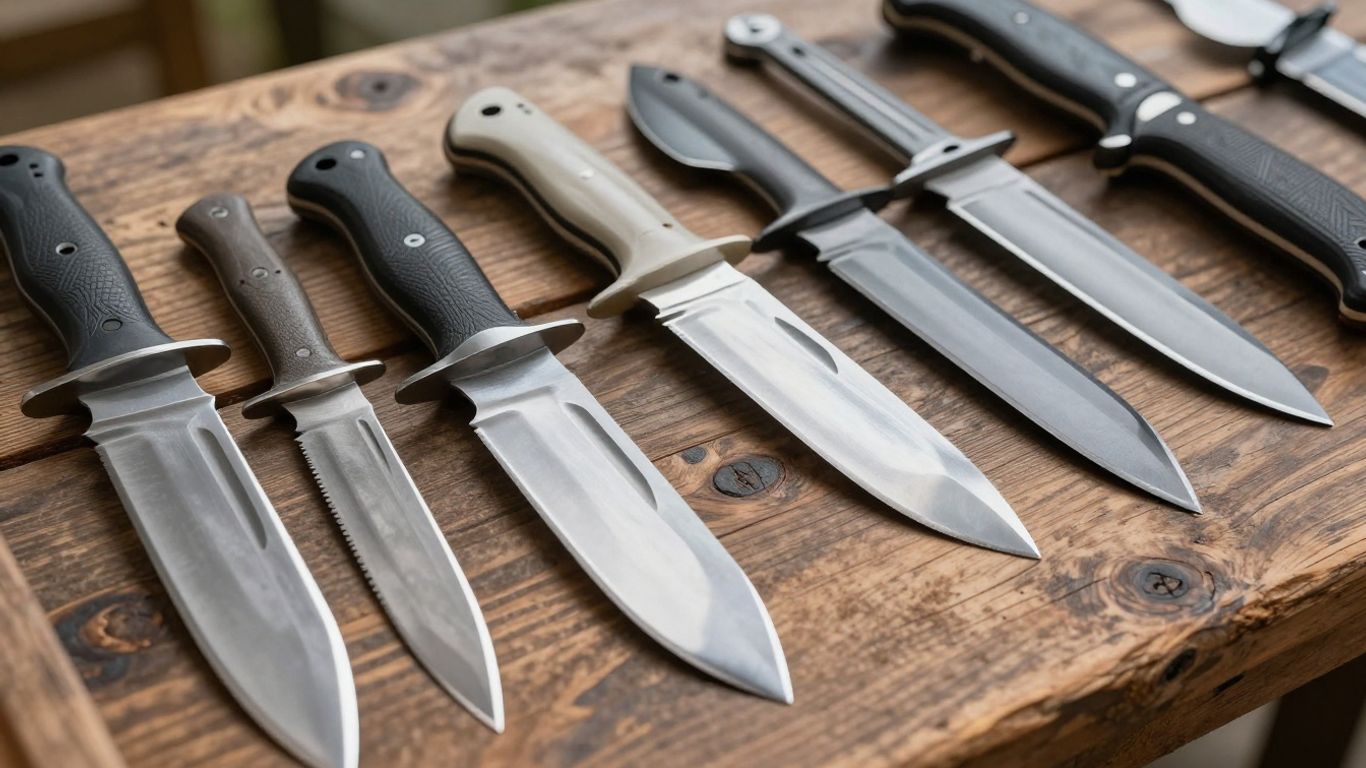
When you're hunting smaller critters like rabbits, squirrels, or birds, you don't need a huge knife. In fact, a smaller blade is often better. Precision is key here, not brute force. A compact folding knife or a lightweight fixed blade with a blade length of around 2.5 to 3.5 inches is usually perfect. These smaller knives give you the control needed for delicate work, like skinning or caping without damaging the hide or meat. Think of it as needing a scalpel more than a machete for these jobs.
Selecting The Best Blade Size For Medium Game
For medium-sized game, such as deer or antelope, you'll want to step up your knife size a bit. A blade in the 3.5 to 4.5-inch range is a good sweet spot. This size offers a good balance between control and the ability to handle tasks like field dressing, skinning, and quartering more efficiently. A mid-sized fixed blade is often preferred for its sturdiness, but a robust folding knife can also do the job well if it has a strong lock and a comfortable grip. You need something that can make longer, cleaner cuts without requiring excessive force.
Appropriate Blade Sizes For Large Game
Taking down something big like an elk, moose, or bear means you'll need a more substantial tool. For these animals, a larger fixed-blade knife with a blade length of 4.5 inches or more is highly recommended. These larger blades provide the leverage and cutting power needed to process a big animal effectively. They make it easier to get through thicker hide and muscle. While a large knife is great for the heavy work, remember that you might still want a smaller, more precise knife for detailed tasks like getting around the head or feet. It's not uncommon for hunters of large game to carry two knives: one for the heavy lifting and another for the finer points.
When picking a knife size, always consider the primary tasks you'll be performing. A knife that's too small can make big jobs difficult and even dangerous, while a knife that's too large can be unwieldy and reduce precision for smaller tasks.
Key Blade Features Beyond Size
Beyond just the length and width, a hunting knife has a few other important bits that make a big difference in how it performs in the field. Think of it like choosing a car – you don't just look at how big it is, right? You check the engine, the tires, and how it feels to drive.
Blade Shape Considerations
The shape of the blade is a pretty big deal. Different shapes are good for different jobs. A blade with a big, sweeping curve, often called a "skinning" or "belly" shape, is fantastic for peeling hide away from meat. It lets you glide through the hide without accidentally poking into the muscle or organs. Then you have blades with a more pointed tip, like a "clip point" or "drop point." These are great for making more precise cuts, like when you're doing detailed work around the head or getting into tight spots. Some hunters even carry two knives: one for the main skinning job and a smaller one for the finer details.
Here's a quick look at some common shapes:
- Drop Point: A versatile shape with a spine that curves down to the tip. Good for general cutting and skinning.
- Clip Point: The spine is cut away, creating a sharper, more pronounced point. Good for piercing and detailed work.
- Skinning/Belly: Features a pronounced curve along the edge. Excellent for hide removal.
- Tanto: An angular, strong tip, often seen in survival knives. Good for piercing but less ideal for slicing.
The best blade shape often comes down to what you're hunting and what tasks you'll be doing most. It's worth thinking about how you'll process your game before you pick a knife.
Understanding Blade Material
What the blade is made of really affects how well it cuts and how long it stays sharp. Most hunting knives are made from steel, but there are different kinds. High-carbon stainless steel is a popular choice because it holds an edge well and doesn't rust easily, which is a big plus when you're out in the elements. Some steels are tougher and keep their sharpness for a really long time, but they can be harder to sharpen in the field. Others might be easier to sharpen but might need a bit more care to prevent rust.
| Steel Type | Pros | Cons |
|---|---|---|
| High-Carbon Stainless | Good edge retention, rust resistant | Can be harder to sharpen than plain carbon |
| Plain Carbon Steel | Easy to sharpen, tough | Prone to rust if not maintained |
| Powdered Metallurgy | Excellent edge retention, very tough | Can be expensive, difficult to sharpen |
The Role Of Blade Thickness
Blade thickness plays a part in how strong the knife is and how it cuts. A thicker blade is generally stronger and can handle tougher jobs, like chopping or prying, without breaking. However, a thicker blade can also be heavier and might not be as nimble for delicate tasks. A thinner blade will slice through things more easily and is lighter, but it might not be the best choice if you plan on doing a lot of heavy-duty work. For most hunting tasks, a blade that's not too thick and not too thin hits a good balance.
Fixed Blade Versus Folding Knife Size
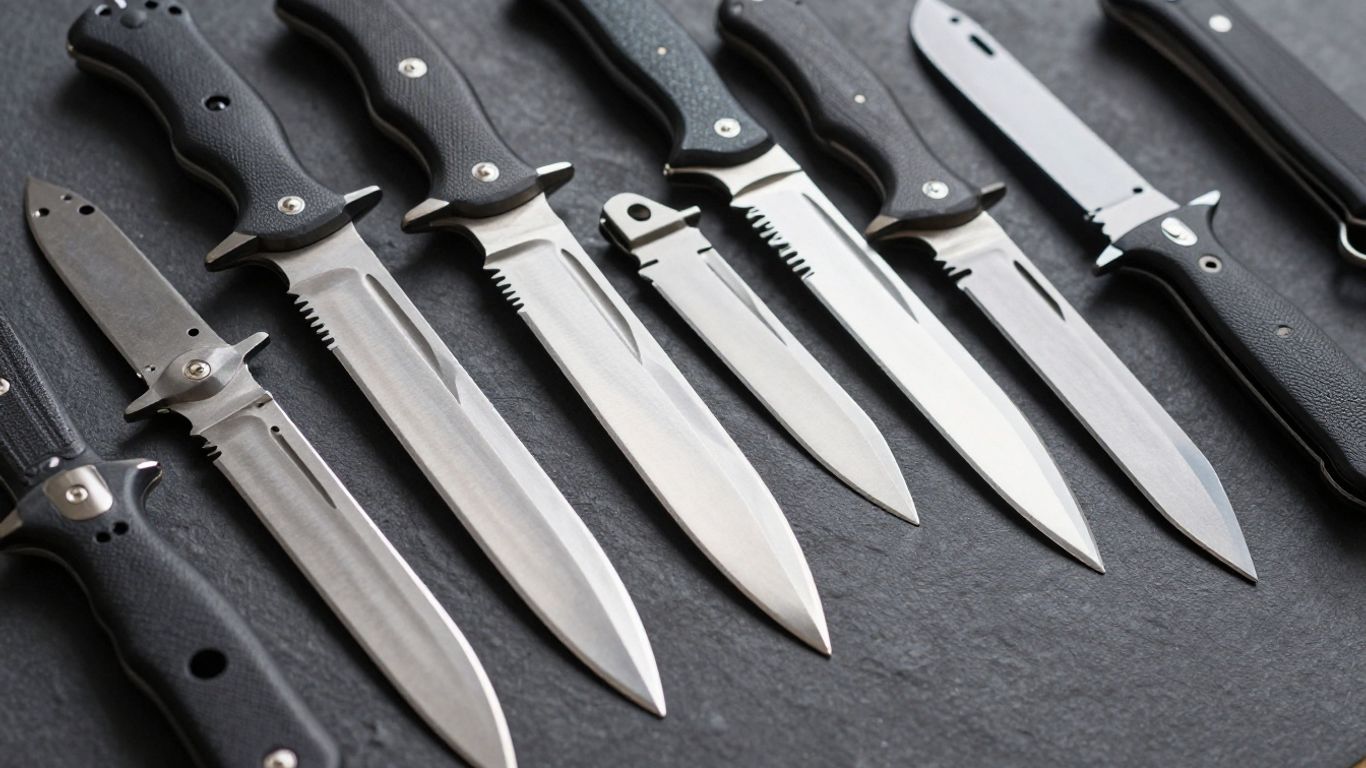
When you're out in the field, the type of knife you carry can make a big difference. For hunting, the choice often comes down to a fixed blade or a folding knife. Each has its own set of advantages, and understanding these can help you pick the right tool for the job.
Advantages Of Fixed Blades For Hunting
Fixed-blade knives are built tough. Because the blade and handle are one solid piece, they don't have any moving parts that can break or get jammed. This makes them super reliable for hard work. Think about skinning a deer or quartering a larger animal; a fixed blade can handle that kind of stress without a problem. They're generally easier to clean too, which is a big plus when you're dealing with game.
- Durability: Built to withstand heavy use and tough tasks.
- Strength: No pivot point means less chance of failure under pressure.
- Ease of Cleaning: Simple design makes them easier to maintain after field dressing.
For serious hunters who demand reliability in all conditions, a fixed blade is often the go-to choice. It's the workhorse you can count on when it matters most.
Portability Of Folding Knives
Folding knives, also called pocket knives, are all about convenience. They fold up neatly into the handle, making them easy to slip into your pocket or pack. This makes them great for everyday carry or for lighter tasks when you're out and about. While they might not be as robust as a fixed blade for really heavy-duty jobs, modern folding knives often have strong locking mechanisms that make them quite safe to use for many hunting-related activities. They're a good option if you need something compact and readily accessible.
When To Choose Each Type
So, when do you pick one over the other? If you're heading out for big game or know you'll be doing a lot of heavy cutting and field dressing, a fixed blade is probably your best bet. Its strength and durability are hard to beat. On the other hand, if you're more focused on smaller game, general camp chores, or just want a handy knife that's easy to carry around, a folding knife is a great choice. Many hunters even carry both – a sturdy fixed blade for the main tasks and a compact folding knife for backup or lighter duties. It really comes down to what you'll be doing and what feels most comfortable and practical for your hunting style.
Practical Considerations For Blade Size
Beyond just the length and width, how a knife feels in your hand and how it handles the work makes a big difference. Think about what you'll actually be doing with it out there.
Comfort and Control With Different Sizes
When you're out in the field, especially if the weather isn't cooperating, a good grip is everything. You don't want your knife slipping, right? A handle that fits your hand well, with some texture or a shape that keeps it secure even when wet, is super important. Smaller knives can offer more control for detailed work, like getting around delicate areas of a trophy animal. Larger knives might feel more substantial for heavier tasks, but if they're too big, they can be clumsy. It's a balance. Try to hold a few different sizes if you can to see what feels right for your grip and the kind of tasks you do most often.
Portability and Pack Weight
If you're hiking miles into your hunting spot, every ounce counts. A big, heavy fixed-blade knife might be great for processing a large animal, but it's going to add noticeable weight to your pack. For hunters who cover a lot of ground, a lighter, more compact knife, maybe even a folding one, could be a better choice. You have to weigh the benefits of a larger blade against the burden of carrying it. Sometimes, a smaller, specialized knife is easier to carry than one big knife that tries to do everything.
Durability and Task Suitability
What kind of game are you hunting, and what will you be doing with the knife? For small game, a smaller, nimble blade is usually perfect. For larger animals, you might need something a bit more robust. A knife designed for skinning, with a curved belly, will make that job much easier than a knife with a straight edge. If you plan on doing a lot of butchering, a flexible boning knife might be worth considering. Think about the primary tasks and choose a knife that's built for them. Trying to use a small caping knife to quarter a deer just isn't practical, and neither is using a huge camp knife for delicate work around antlers.
Choosing a knife isn't just about picking the longest or shortest blade. It's about finding a tool that fits your hand, your pack, and the job you need it to do. A knife that's comfortable and capable will make your time in the field much more efficient and enjoyable.
Specialized Blades And Their Sizes
Beyond the general-purpose hunting knife, there are specialized blades designed for very specific tasks. Using the right tool for the job can make a big difference in efficiency and how clean your processing is. Think of it like having different wrenches for different bolts – you wouldn't use a massive pipe wrench on a tiny screw, right?
Skinning Knife Blade Dimensions
Skinning knives are all about making that initial cut to remove the hide. They usually have a curved belly that lets you glide through the skin without accidentally poking into the meat or organs. The length can vary, but many hunters find a blade between 3.5 and 5 inches works best. This size gives you enough length for long, smooth strokes while still being manageable.
- Blade Length: 3.5 to 5 inches
- Blade Shape: Sweeping, curved belly
- Tip: Often a rounded or slightly pointed tip for control
Boning And Fillet Knife Sizes
These knives are built for getting meat off the bone or preparing fish. They're typically long, thin, and flexible. This flexibility is key because it lets the blade bend and follow the contours of the bone, allowing for very precise cuts. You want to get as much meat as possible, after all.
- Blade Length: 5 to 7 inches (can be longer for large fish)
- Blade Shape: Narrow, thin, and flexible
- Tip: Tapered to a fine point for detailed work
Caping Knife Blade Lengths
Caping knives are for the really detailed work, especially around the head and antlers for trophy preservation. They're small and nimble, allowing for delicate cuts without damaging the hide or fur. You need a lot of control here, so a smaller blade is definitely the way to go.
- Blade Length: 2 to 3.5 inches
- Blade Shape: Often a drop point or clip point, but very compact
- Tip: Sharp and precise for intricate cuts
Using a knife that's too big for a delicate job can lead to mistakes. Conversely, trying to skin a large animal with a tiny caping knife will just be frustrating and inefficient. Matching the blade to the task is a game-changer in the field.
Wrapping It Up: Finding Your Perfect Blade
So, we've gone over a lot about hunting knives, from what makes a good blade to how different shapes work for different jobs. It really comes down to what you're hunting and how you plan to process it in the field. Whether you prefer a sturdy fixed blade for tough tasks or a handy folding knife for smaller game, the main thing is to pick something that feels right in your hand and can handle the work. Don't forget that taking care of your knife, keeping it sharp and clean, will make it last a long time and perform better when you really need it. Happy hunting out there!
Frequently Asked Questions
What makes a hunting knife different from a regular knife?
Hunting knives are built tough for outdoor jobs. They have strong, sharp blades, often made of special steel that stays sharp. They're designed for tasks like cleaning game, cutting rope, or preparing food in the wild, unlike kitchen knives which are for cooking.
Why do hunting knives have curved blades?
Many hunting knives have a curve in the blade because it helps make smooth, careful cuts when you're skinning an animal. This curve lets you peel the hide away without accidentally poking into the meat or organs, making the job much cleaner and easier.
Is a fixed blade or folding knife better for hunting?
It depends on what you're doing! Fixed blades are super strong and reliable, great for tough jobs or big game. Folding knives are easier to carry and good for smaller tasks or when you need something compact. Some hunters even carry both!
What's the best size blade for hunting?
The right size depends on the animal. Smaller knives are good for small game like rabbits or birds, where you need to be precise. For bigger animals like deer or elk, a slightly larger and stronger blade is more helpful for tasks like skinning and quartering.
Do I need a special knife to skin animals?
Yes, skinning knives are designed for this. They usually have a long, curved edge that's perfect for slicing through the hide without cutting the meat underneath. It makes the whole process much smoother and preserves more of the meat.
How do I take care of my hunting knife?
Always clean your knife after using it with soap and water, and dry it completely to prevent rust. Keep the blade sharp using a sharpener. Store it in a dry place, and if it's made of certain steels, it's best not to leave it in a leather sheath for long periods as leather can hold moisture.


